TYO:6501
A decade ago, Hitachi was a sprawling Japanese conglomerate making everything from TVs to nuclear plants — admired for engineering but criticized for diffuse focus. Today it is one of the most dramatic corporate transformations in Japan: a leaner company rebuilt around digital, energy, and rail. Hitachi’s reinvention is a masterclass in change.
From everything to a focused few
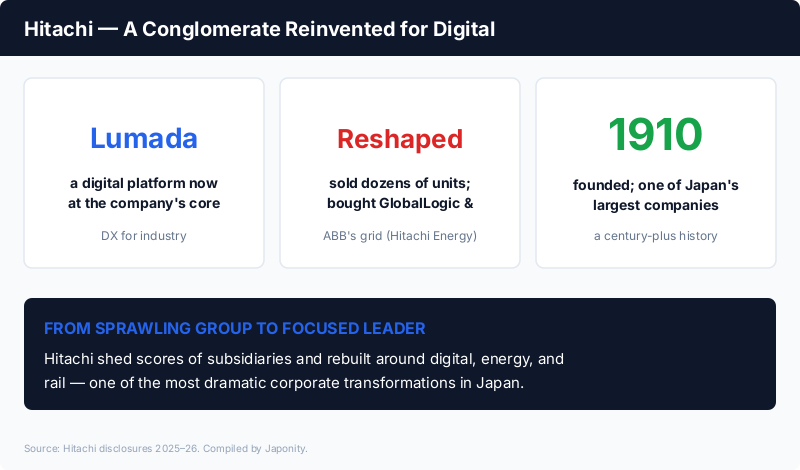
Founded in 1910, Hitachi grew into one of Japan’s largest and most diversified industrial groups. After a record corporate loss in 2009, it began a radical restructuring: selling or spinning off dozens of businesses — including chemicals, metals, power tools, and consumer electronics — to concentrate on higher-value, globally competitive fields. The discipline to shed even iconic units set Hitachi apart from peers that clung to legacy operations.
Building a digital-and-infrastructure leader
Hitachi rebuilt around three pillars: Digital Systems & Services, powered by its Lumada platform and the 2021 acquisition of US software firm GlobalLogic; Green Energy & Mobility, anchored by its purchase of ABB’s power-grid business (now Hitachi Energy) and a major rail business; and Connective Industries. The strategy fuses Hitachi’s deep “operational technology” — its century of running physical machines and infrastructure — with modern IT, aiming to lead the digital transformation of industry and the energy transition.
Why it matters for global partners and investors
- Investors get exposure to digital transformation, grid electrification, and rail — secular growth themes — through a refocused, higher-margin global company.
- Industries and utilities worldwide engage Hitachi for grid equipment, rail systems, and digital/operational-technology solutions.
- The lesson — a conglomerate ruthlessly focusing on competitive, high-growth fields — is studied by diversified companies everywhere.
Frequently asked questions
What does Hitachi do now?
Hitachi has refocused on three areas: digital systems and services (led by its Lumada platform and GlobalLogic), green energy and mobility (power grids via Hitachi Energy, and rail), and connective industries — after selling many legacy businesses.
How did Hitachi transform?
Following a record loss in 2009, it sold or spun off dozens of businesses to concentrate on higher-value, globally competitive fields, and acquired companies like GlobalLogic and ABB’s power-grid unit to build a digital-and-infrastructure leader.
What is Lumada?
Lumada is Hitachi’s digital platform for industrial transformation, combining its operational-technology expertise with IT to help customers digitize and optimize physical operations.
Looking to partner with, or source from, a transformed Japanese leader? Contact Japonity — we connect international businesses with Japan’s best companies, products, and technologies.
Interested in Japanese business opportunities?
Whether you're looking for technology partners, engineering talent, or market insights — we can help connect you with the right Japanese organizations.
Get in Touch →