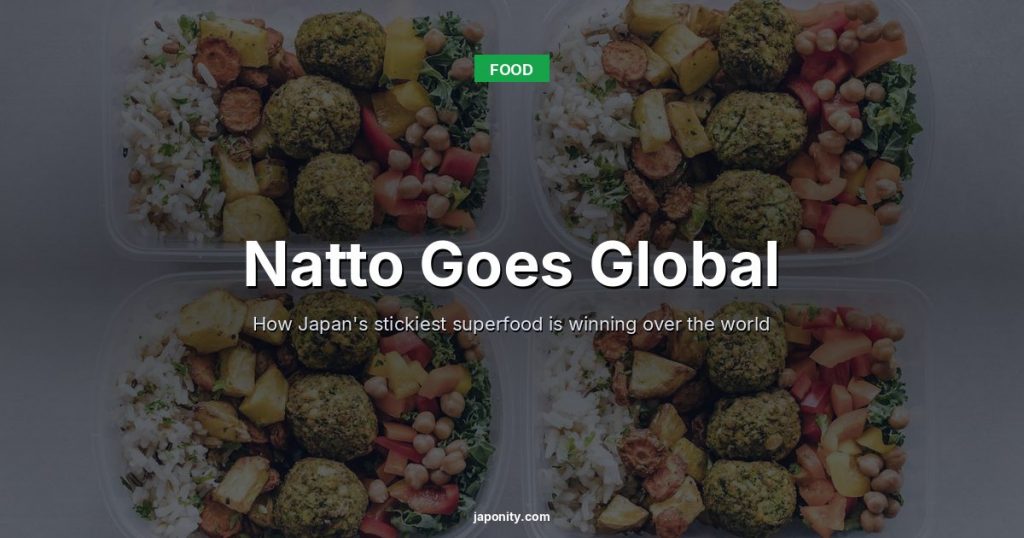
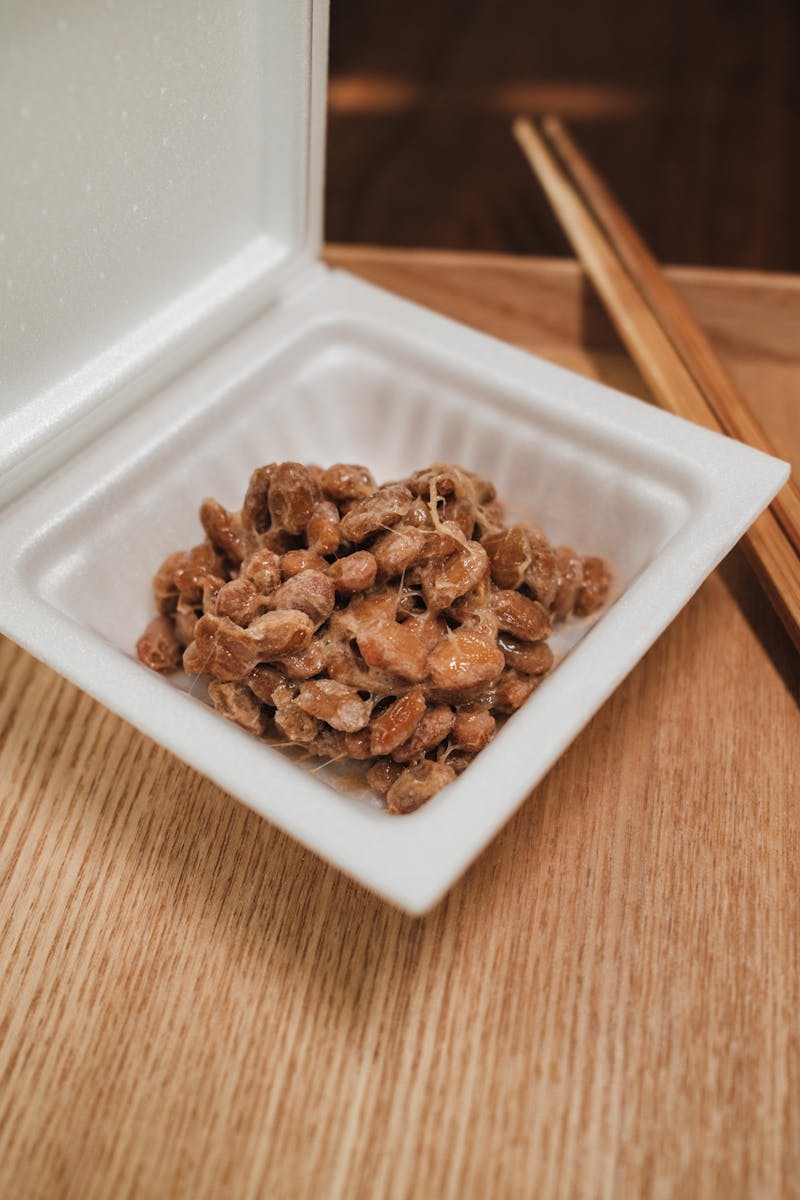
It is sticky, pungent, and covered in slimy strings. It is also one of the most nutrient-dense foods on the planet — 19g of protein per 100g, loaded with vitamin K2, and containing nattokinase, a blood-clot dissolving enzyme found nowhere else in nature. Natto, Japan’s most polarizing food, is quietly becoming a global superfood.
Natto by the Numbers
| Nutrient | Per 100g | % Daily Value |
|---|---|---|
| Calories | 211 kcal | — |
| Protein | 19.4g | 39% |
| Vitamin K2 (MK-7) | 1,103 µg | 542% |
| Fiber | 5.4g | 19% |
| Iron | 8.6mg | 48% |
| Calcium | 217mg | 17% |
| Nattokinase | Present | Unique to natto |
Sources: USDA FoodData Central (NDB #16113, “Natto”); 文部科学省「日本食品標準成分表」(8th ed.); % Daily Values based on a 2,000 kcal diet (FDA reference).
Japan’s natto exports have doubled over six years, reaching 3,300 tons (approximately ¥1.77 billion) in 2023. The primary export markets are the US, China (39% including Hong Kong), Taiwan, and South Korea — driven largely by health-conscious consumers and the Asian diaspora.
The Export Challenge: Cold Chain and Cultural Barriers
Natto’s biggest obstacle to global scale is logistics. Fresh natto requires refrigeration throughout the supply chain, limiting distribution to cities with established Japanese food infrastructure. The smell and texture also present a cultural barrier in Western markets.
But two innovations are changing the game: freeze-dried natto powder (no refrigeration needed, neutral texture) and flavored/seasoned natto products designed for Western palates.
Key Players in Natto’s Global Expansion
Takano Foods (タカノフーズ) — The Market Leader
Japan’s #1 natto producer. Their “Okame Natto” brand is synonymous with natto in Japan, commanding the largest domestic market share. Founded in 1932 in Ibaraki Prefecture. Produces over 30 varieties. Expanding exports to the US and Asia, primarily serving Japanese grocery channels.
sonomono Inc. (そのもの) — The Innovator
The most exciting company in the natto space. sonomono developed the world’s first freeze-dried natto powder (2020), completely eliminating the cold-chain requirement. Their product can be sprinkled on salads, mixed into smoothies, or taken as capsules — removing the texture and smell barriers that limit natto’s appeal. Won the Cool Japan Award 2024. Published a clinical study in the journal Nutrients (2022, 205 participants) validating health benefits. Available on Amazon US.
Asaichiban (朝一番) — The Export Pioneer
One of the longest-standing natto exporters, shipping overseas since approximately 1985. 20-30% of their sales come from international markets — a remarkably high ratio for a natto company. Produces 1.1 million packs per month. Founded in 1948.
Mizkan (ミツカン) — The Conglomerate
Japan’s #2 natto producer with the “Kin no Tsubu” (金のつぶ) brand. Part of the larger Mizkan Group (founded 1804), which also dominates vinegar and seasonings. Significant presence in North America, Europe, and Asia-Pacific. Their global distribution network gives natto access to channels that smaller producers cannot reach.
The Health Science Behind Natto
Natto’s health claims are backed by serious research. Nattokinase has been studied extensively for cardiovascular benefits — it is the only known food-derived enzyme that directly dissolves fibrin (blood clots). Vitamin K2 (menaquinone-7) supports bone density and cardiovascular health. The fermentation process also creates bioavailable isoflavones and probiotics (Bacillus subtilis).
A 2017 study in the American Journal of Clinical Nutrition following 92,915 Japanese adults over 15 years found that higher natto consumption was associated with lower cardiovascular mortality.
Market Opportunity
The global probiotics market is projected to reach $95 billion by 2028. Natto sits at the intersection of three booming trends: probiotics, plant-based protein, and functional foods. For international distributors and health food retailers, natto — especially in its freeze-dried powder form — represents an untapped category with strong health credentials and growing consumer awareness.
The Bottom Line
Natto is no longer just “that weird Japanese food.” With exports doubling, clinical research validating its benefits, and innovations like freeze-dried powder eliminating the barriers to mainstream adoption, natto is positioned for significant global growth. The companies leading this charge — from the established giants to innovative startups like sonomono — are actively seeking international partners.
Interested in Japanese business opportunities?
Whether you're looking for technology partners, engineering talent, or market insights — we can help connect you with the right Japanese organizations.
Get in Touch →