Japan’s anime industry hit a record ¥3.84 trillion ($25 billion) in 2024, with overseas revenue surpassing domestic for the first time. Merchandising and licensing — not streaming — remain the largest revenue segment. For international brands, retailers, and manufacturers, anime IP represents one of the most powerful consumer engagement tools on the planet. Here is how the licensing economy works, who controls the rights, and how to get a deal done.
The ¥3.84 Trillion Opportunity
The anime industry is no longer a niche. It is a global entertainment powerhouse growing faster than Hollywood, K-pop, or gaming. The Association of Japanese Animations (AJA) reported that the global anime market reached ¥3.84 trillion in 2024 — a 15% year-over-year increase and a new all-time record.
The most important shift: overseas revenue now accounts for 56% of total industry income ($14.25 billion), surpassing domestic revenue ($10.97 billion) for the first time. Overseas revenues grew 26% year-over-year, while domestic sales rose just 2.8%. The message is clear — anime’s future is global.
| Metric | 2023 | 2024 | Change |
|---|---|---|---|
| Total Market | ¥3.35T ($22.2B) | ¥3.84T ($25.0B) | +15% |
| Overseas Revenue | ¥1.73T ($11.3B) | ¥2.18T ($14.25B) | +26% |
| Domestic Revenue | ¥1.62T ($10.6B) | ¥1.66T ($10.97B) | +2.8% |
| Overseas Share | 52% | 56% | +4pt |
Source: Association of Japanese Animations (AJA), “Anime Industry Report 2025” (data for 2024); Variety; The Hollywood Reporter.
The Japanese government has made anime a pillar of its “New Cool Japan Strategy,” setting a target of ¥20 trillion in overseas content sales by 2033 — roughly tripling the current level.
Where the Money Is: Revenue Breakdown
When people think “anime business,” they think streaming. But streaming is not where the biggest money flows. Merchandising and licensing consistently account for the largest share of anime industry revenue.
| Revenue Segment | Share of Total Revenue | Growth Trend |
|---|---|---|
| Merchandising & Licensing | ~35–44% | Stable, largest segment |
| Streaming / Internet Distribution | ~20% | Fastest growing (CAGR 13.8%) |
| Theatrical (Box Office) | ~12% | Event-driven spikes |
| TV Broadcast | ~8% | Declining (shift to streaming) |
| Music & Live Events | ~7% | Growing (concerts, exhibitions) |
| Pachislot / Pachinko | ~5% | Japan-specific, stable |
Sources: AJA, Anime Industry Report 2025; Grand View Research, Anime Market Report (2025); Statista, “Revenue of the anime industry Japan, by segment.”
This means the real business opportunity for international companies is not in making anime — it is in using anime IP to sell products, build brands, and engage consumers.
The Franchise Giants: Who Generates the Most Revenue
Not all anime IP is created equal. A handful of mega-franchises generate billions in annual revenue, primarily through merchandising and licensing rather than viewership.
| Franchise | Estimated All-Time Revenue | FY2024 Revenue (Bandai Namco) | Primary Revenue Driver |
|---|---|---|---|
| Pokémon | $100B+ | — | Games, cards, merchandise |
| Anpanman | ~$60B | — | Children’s merchandise (Japan-dominant) |
| Dragon Ball | $30B+ | ¥190.6B | Games, merchandise, licensing |
| Gundam | ~$26B | ¥153.5B | Model kits (Gunpla), games |
| One Piece | $20B+ | ¥139.5B | Manga, merchandise, licensing |
| Naruto / Boruto | $15B+ | — | Merchandise, games, streaming |
| Demon Slayer | $10B+ (since 2019) | — | Merch, box office, licensing |
Sources: All-time estimates from List of highest-grossing media franchises (various industry sources); FY2024 (Apr 2024–Mar 2025) data from Bandai Namco Holdings IR Reports; Screen Rant.
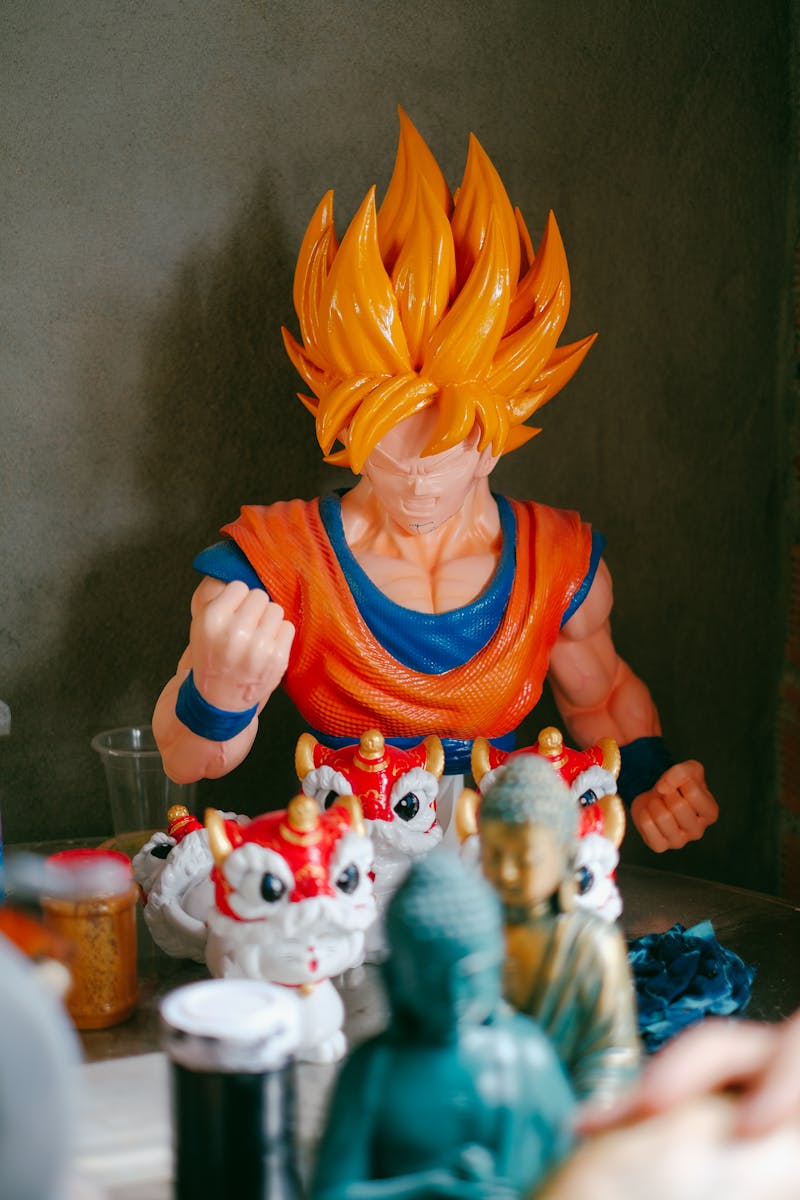
Notice the pattern: the most valuable anime franchises are the ones with the deepest merchandising ecosystems — not necessarily the ones with the highest streaming numbers. Dragon Ball generated ¥190.6 billion in a single fiscal year through Bandai Namco alone, driven by figures, apparel, games, and licensed products.
How Anime Licensing Actually Works: The Production Committee System
This is where most international companies get confused — and where deals often stall.
Unlike Hollywood, where a single studio typically owns all rights to a property, anime IP is usually owned by a production committee (seisaku iinkai / 製作委員会) — a consortium of companies that co-finance and co-own the anime. A typical committee includes:
- Manga publisher (Shueisha, Kodansha, Shogakukan) — holds original IP rights
- Animation studio (MAPPA, ufotable, Toei) — produces the anime, but usually does NOT own it
- TV broadcaster (TV Tokyo, Fuji TV) — broadcast rights
- Music label (Sony Music, Aniplex) — soundtrack and music rights
- Toy/merchandise company (Bandai Namco, Takara Tomy) — merchandise rights
- Distributor (Toho, Aniplex) — theatrical and international distribution
Each committee member holds rights to specific exploitation categories. This means: there is no single entity you can call to license “everything.” You may need to negotiate with one party for merchandise rights, another for promotional use, and yet another for digital content.
The Key Gatekeepers for International Licensing
| Company | Parent | Key IP | Licensing Strength |
|---|---|---|---|
| Aniplex | Sony Music | Demon Slayer, SAO, Fate | Streaming, merch, theatrical (global) |
| Toei Animation | Toei Company | One Piece, Dragon Ball, Precure | Full-stack: TV, merch, theatrical, licensing |
| Bandai Namco | Bandai Namco Holdings | Gundam, Dragon Ball (merch) | Merchandise, toys, games |
| VIZ Media | Shueisha / Shogakukan | Naruto, My Hero Academia, JJK | Manga, streaming (North America) |
| Kadokawa | Kadokawa Corporation | Re:Zero, Overlord, Shield Hero | Publishing, licensing (Asia, global) |
| TMS Entertainment | Sega Sammy | Detective Conan, Lupin III | Global distribution, licensing |
Sources: Company corporate websites and IR disclosures; License Global; Vitrina AI, “Anime Licensing and Distribution Playbook 2026”.
Case Studies: International Brand × Anime IP Collaborations
The best way to understand anime licensing is to look at what is already working. Here are the most notable recent collaborations:
Uniqlo UT × Multiple Franchises — The Gold Standard
Uniqlo’s UT (graphic T-shirt) line has become the single most successful anime licensing program in fashion. In 2024–2025 alone, Uniqlo released collections for Dragon Ball (40th anniversary), Demon Slayer (Infinity Castle), Chainsaw Man, One Piece (Archive Collection), and Jujutsu Kaisen. Pricing is accessible ($14–21 per shirt), production volumes are massive, and the designs balance fan service with mainstream wearability. Uniqlo’s parent Fast Retailing works directly with Japanese licensors through long-standing relationships — a model that other fashion brands are now trying to replicate.
Nike × Yu-Gi-Oh! — Sneaker Culture Meets Anime
In September 2025, Nike released the Air Max 95 QS “Yu-Gi-Oh!” pack — based on the unofficial Nike sneakers worn by Joey Wheeler in the original manga. Retail price: ~$200. The release included official Nike × Yu-Gi-Oh! playable trading cards in special packaging. This collaboration demonstrates how anime IP can command premium pricing and create cultural moments that transcend traditional product categories.
McDonald’s Japan × One Piece — QSR Mass Market
McDonald’s Japan has run multiple One Piece campaigns, leveraging the franchise’s universal appeal in Japan to drive foot traffic and limited-edition meal sales. The campaigns include exclusive toys, packaging, and in-store decorations. For QSR brands operating in Asia-Pacific, anime IP campaigns are now a proven traffic driver.
Baskin-Robbins Japan × One Piece — F&B Licensing
In mid-2025, Baskin-Robbins Japan launched a One Piece collaboration with limited-edition desserts and exclusive merchandise. This shows how even food and beverage brands can leverage anime IP for product differentiation and seasonal campaigns.
A Practical Guide: How to License Anime IP for Your Brand
Step 1: Define Your Licensing Category
Before approaching any Japanese company, be crystal clear about what you need:
- Product licensing — Using anime characters/artwork on your products (apparel, accessories, food packaging, cosmetics)
- Promotional licensing — Using anime IP for a limited-time campaign, event, or advertisement
- Co-branding — Creating a joint product line with the anime brand (higher tier, requires deeper partnership)
- Digital/content licensing — Using anime clips, music, or assets in your digital content or app
Each category has different rights holders, pricing structures, and approval processes.
Step 2: Identify the Right Licensor
This is where most international companies fail. You cannot simply email “Demon Slayer” — you need to identify which entity controls the specific rights you need.
- For merchandise rights: typically the toy/merchandise committee member (Bandai Namco, Takara Tomy) or a designated licensing agent
- For promotional use: often the publisher (Shueisha, Kodansha) or the lead distributor (Aniplex, Toei)
- For regional rights: designated territorial agents (VIZ Media for North America, Crunchyroll/Sony for streaming)
Attending Anime Japan (March, Tokyo), TIFFCOM (October/November, Tokyo), or Licensing Expo (June, Las Vegas) is the most efficient way to meet licensors face-to-face and understand their requirements.
Step 3: Prepare Your Pitch
Japanese licensors are selective. They will evaluate:
- Brand fit — Does your brand align with the anime’s image and target audience?
- Distribution reach — How many consumers will the licensed product reach?
- Quality control — Can you meet Japanese standards for product quality and artwork reproduction?
- Financial terms — Standard anime licensing deals involve a minimum guarantee (MG) plus royalty (typically 5–15% of wholesale)
- Timeline — Expect 3–6 months from initial contact to contract signing, plus 2–3 months for artwork approval
Step 4: Navigate the Approval Process
Japanese licensors have rigorous approval processes for how their IP is used. Every design, product mockup, and marketing material must be submitted for approval — and revisions are common. This process exists to protect brand integrity, and it is non-negotiable. Budget extra time for this.
Why 2026 Is the Best Time to Negotiate
Three factors converge to make 2026 an unusually attractive window for international companies seeking anime IP deals:
- Weak yen — At 150–160 JPY/USD, licensing fees denominated in yen are 30–40% cheaper in dollar terms than they were in 2021. Minimum guarantees and royalty payments stretch further
- Government push — The Japanese government’s “New Cool Japan Strategy” is actively encouraging licensors to pursue international partnerships, with JETRO providing matchmaking support
- Market momentum — With 160 international anime events across 50 countries and anime penetrating mainstream culture globally, the consumer demand to support licensed products has never been stronger
Common Pitfalls for International Companies
- Approaching the wrong entity — Contacting the animation studio when they do not hold licensing rights. Always identify the production committee structure first
- Underestimating approval timelines — Japanese approval processes are thorough. Plan for 6+ months from first contact to product launch
- Ignoring cultural sensitivity — Anime characters and artwork are treated with great care in Japan. Proposals that alter characters, use them in inappropriate contexts, or disrespect the source material will be rejected immediately
- Expecting Western-speed communication — Consensus-driven decision-making (ringi) means responses take longer. Patience and persistence are essential
- Skipping the intermediary — For first-time licensees, working with a Japanese licensing agent or trading company dramatically increases your chances of success
The Bottom Line
Anime IP is no longer a subcultural curiosity — it is a $25 billion global industry where merchandising and licensing generate more revenue than streaming. For international brands, retailers, food companies, and manufacturers, the opportunity is clear: anime characters drive consumer engagement, command premium pricing, and create cultural moments that traditional marketing cannot replicate.
The licensing process is complex — the production committee system, multi-party approvals, and rigorous quality standards require patience and expertise. But for companies that navigate this system successfully, the rewards are substantial. The weak yen makes 2026 an especially compelling time to negotiate.
Whether you are a fashion brand exploring character collaborations, a food company seeking promotional IP, or a retailer building an anime merchandise category — the starting point is the same: understand who owns the rights, and approach them correctly.
Looking to license Japanese anime IP for your brand or products? Contact Japonity — we connect international businesses with Japan’s anime licensors, production committees, and licensing agents.
Interested in Japanese business opportunities?
Whether you're looking for technology partners, engineering talent, or market insights — we can help connect you with the right Japanese organizations.
Get in Touch →