TYO:6383
You have almost certainly never heard of Daifuku. Yet the next time you receive a same-day delivery from Amazon, board a flight at Changi Airport, or use a smartphone powered by a TSMC chip, there is a good chance that Daifuku’s machines moved the goods, baggage, or silicon wafers behind the scenes. Founded in Osaka in 1937, Daifuku Co., Ltd. (TSE: 6383) is the world’s largest material handling systems company — and one of Japan’s most quietly dominant global enterprises.
What Daifuku Actually Does
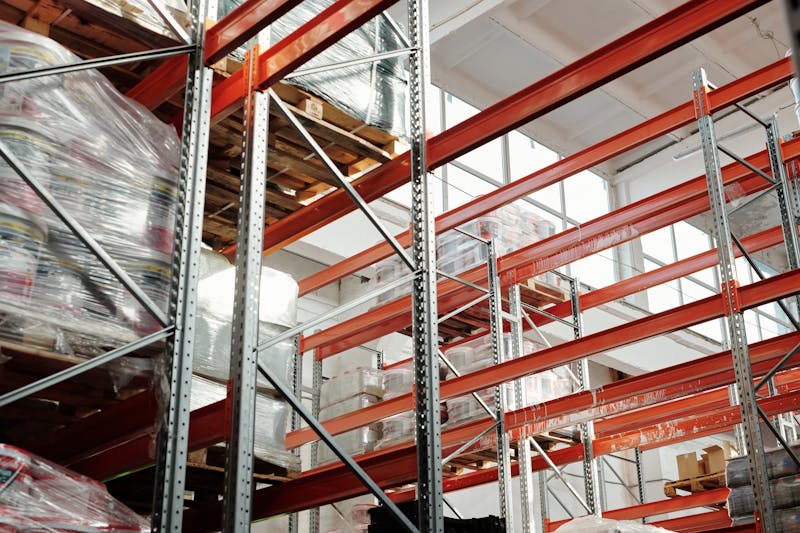
Material handling is the industrial discipline of moving, storing, sorting, and picking physical goods inside factories, warehouses, airports, and cleanrooms. Daifuku designs, manufactures, installs, and services the automated systems that perform these tasks at scale — conveyor lines, automated storage and retrieval systems (AS/RS), overhead hoist transport (OHT) for semiconductor fabs, baggage handling systems for airports, and robotic sorting solutions for e-commerce fulfillment centers.
The company operates across four core business segments, each addressing a distinct end market:
- Intralogistics (e-commerce & distribution): Automated warehouse and fulfillment systems for retailers, 3PLs, and manufacturers. Key customers include Amazon, Walmart, and major logistics operators worldwide.
- Cleanroom (semiconductors & flat-panel displays): Automated material handling systems (AMHS) for semiconductor fabs and display factories. Daifuku’s OHT systems form the logistical backbone inside the mega-fabs of TSMC, Samsung, and Intel, transporting 300mm wafers with contamination-free precision.
- Automotive: Production line systems for automobile manufacturers, covering body welding, painting, and final assembly. Toyota, Honda, and other major OEMs rely on Daifuku lines.
- Airport: Baggage handling and airport logistics systems deployed at over 500 airports globally, including Changi, Incheon, Denver, and Dubai.
Financial Performance: Record After Record
Daifuku’s financial trajectory has been remarkable. In FY2025 (the fiscal year ended December 31, 2025), the company posted record results for the fourth consecutive year, with consolidated net sales of ¥660.7 billion and operating profit exceeding ¥100 billion for the first time in its history.
| Metric | FY2023 (Apr 2023–Mar 2024) | FY2024 (Apr–Dec 2024, 9-month transitional) | FY2025 (Jan–Dec 2025) |
|---|---|---|---|
| Net Sales | ¥611.4B | ¥563.2B | ¥660.7B |
| Operating Profit | ¥56.7B (est.) | ¥64.0B (annualized forecast) | ¥100.8B |
| Net Income | ¥43.5B (est.) | ¥57.1B | ¥78.0B |
| Orders Received | ¥636.0B (est.) | ¥333.9B (+13.5% YoY) | ¥700.0B (forecast) |
| Op. Profit Growth (YoY) | — | — | +24.4% |
Sources: Daifuku IR — Financial Results; FY2024 Q4 Presentation; SEISANZAI Japan (Nov 2025); Stock Analysis. Note: FY2024 was a 9-month transitional period due to fiscal year-end change from March to December. FY2023 estimates based on annualized figures from Daifuku IR disclosures.
Several things stand out. First, FY2025 operating profit of ¥100.8 billion represents a 24.4% year-over-year increase, driven by price revisions, a favorable product mix, and operational efficiency gains. Second, the operating margin expanded meaningfully, reflecting Daifuku’s strategic shift toward higher-margin aftermarket services and software-intensive solutions. Third, orders of ¥700 billion signal a robust pipeline heading into 2026.
Global Footprint: 70% Overseas Revenue
Daifuku is a genuinely global operation. The company maintains production and sales bases in 25 countries and regions, with approximately 70% of consolidated revenue generated outside Japan. This overseas ratio has been climbing steadily over the past decade, reflecting Daifuku’s deliberate internationalization strategy and the global nature of its customer base.
North America, driven by the Daifuku North America subsidiary (formerly Wynright and Jervis B. Webb), is the single largest overseas market, with FY2025 order intake of ¥196.1 billion — an increase of ¥12.8 billion year-over-year. The North American operation serves major e-commerce players, automotive manufacturers, and airport operators, and has been expanding its engineering and service capabilities to meet growing demand. South Korea (via subsidiary Clean Factomation) and Taiwan are critical cleanroom markets, anchored by long-term relationships with semiconductor giants. Southeast Asia and Europe represent growing intralogistics opportunities, particularly as manufacturers diversify supply chains beyond China.
As of December 2024, Daifuku employed approximately 14,500 people worldwide (11,042 on a parent-company basis), with its global headquarters in Osaka and major operations in the United States, South Korea, Taiwan, China, Thailand, and the United Kingdom. The company also operates a dedicated technology development center in Shiga Prefecture, Japan, where next-generation automation systems are designed and tested.
The Macro Tailwinds: E-Commerce and Semiconductors
E-Commerce Fulfillment Boom
Global e-commerce sales are projected to surpass $7 trillion by 2026, and every incremental dollar of online retail spending drives demand for automated fulfillment infrastructure. Retailers and 3PLs are racing to build or upgrade distribution centers with goods-to-person robotics, high-speed sortation, and AS/RS technology — all of which sit squarely in Daifuku’s core competency. The company’s intralogistics segment has seen sustained order growth, particularly in North America, where labor shortages and rising wage costs make automation an economic imperative.
Semiconductor Capex Super-Cycle
The global push for AI infrastructure, advanced-node chip manufacturing, and supply chain localization (CHIPS Act in the US, similar programs in Europe and Japan) is driving a multi-year wave of semiconductor fab construction. Every new fab requires AMHS — the automated transport systems that move wafers between process tools in an ultra-clean environment. Daifuku holds the leading global market share in cleanroom AMHS, and its Korean subsidiary Clean Factomation saw orders increase by ¥17.6 billion in FY2025, driven by AI-related semiconductor investment.
Airport Modernization
Post-pandemic passenger traffic recovery, combined with aging baggage handling infrastructure and new terminal construction projects, continues to fuel Daifuku’s airport segment. The company’s systems are installed in over 500 airports worldwide, and the pipeline for new projects remains healthy. International air passenger numbers surpassed pre-COVID levels in 2024, and airports in the Middle East, Southeast Asia, and North America are investing heavily in terminal expansions and baggage system upgrades. Daifuku’s airport technology subsidiary (formerly BCS Group and Jervis B. Webb) provides end-to-end solutions from check-in conveyor systems to high-speed baggage sortation and claim carousels, with an increasing focus on self-service bag drop and RFID-based tracking.
Competitive Landscape
The automated material handling market was valued at approximately $70.7 billion in 2025 and is projected to reach $127.3 billion by 2030 (CAGR: 12.5%). Daifuku competes with a mix of European and Japanese rivals, but its unique breadth across all four segments — intralogistics, cleanroom, automotive, and airport — gives it a diversified moat that few competitors can match.
| Company | HQ | Annual Revenue (approx.) | Key Segments | Market Cap (approx.) |
|---|---|---|---|---|
| Daifuku | Osaka, Japan | ¥660.7B (~$4.5B) | Intralogistics, Cleanroom, Automotive, Airport | ¥1.85T (~$12.5B) |
| KION Group (Dematic) | Frankfurt, Germany | ~€11.4B (~$12.3B) | Warehouse automation, forklifts | ~€6.5B |
| Toyota Industries | Aichi, Japan | ~¥3.8T (diversified) | Forklifts, logistics, automotive components | ~¥3.2T |
| SSI Schaefer | Neunkirchen, Germany | ~€3.5B | Warehouse systems, AS/RS | Private |
| Jungheinrich | Hamburg, Germany | ~€5.0B | Forklifts, warehouse automation | ~€4.0B |
| Murata Machinery | Kyoto, Japan | ~¥450B | Cleanroom logistics, textile machinery | Private |
Sources: Mordor Intelligence — Automated Material Handling Market Report (2025); Fortune Business Insights — AMH Equipment Market; company IR disclosures and annual reports. Revenue figures are latest available full-year data (FY2024/FY2025). Market caps as of Q1 2026.
What makes Daifuku’s position distinctive is its dominance in cleanroom AMHS — a high-barrier, high-margin niche where switching costs are enormous and the installed base generates decades of aftermarket revenue. No Western competitor has a comparable position in this segment.
Strategic Priorities and Growth Levers
Daifuku’s medium-term management plan targets continued growth through several strategic levers:
- Aftermarket expansion: Maintenance, retrofitting, and software upgrades for the installed base of systems across all segments. This recurring revenue stream carries higher margins than new system sales.
- Software and digital services: Warehouse execution systems (WES), digital twins, predictive maintenance, and AI-powered optimization are becoming a larger share of the value proposition.
- Geographic expansion: Deepening presence in North America (where the CHIPS Act and e-commerce growth create dual tailwinds), Southeast Asia, and India.
- Cleanroom AMHS for AI fabs: As TSMC, Samsung, Intel, and Rapidus build new advanced-node fabs for AI chip production, Daifuku’s cleanroom systems are a critical enabler.
- Sustainability: Energy-efficient systems, carbon-neutral factory operations, and lifecycle-oriented services aligned with customer ESG goals.
Partnership and Investment Opportunities
For international businesses and investors, Daifuku presents several compelling angles:
- Technology partnerships: Companies developing warehouse robotics, autonomous mobile robots (AMRs), AI-based warehouse management, or IoT sensor technology could find synergies with Daifuku’s system integration capabilities.
- Distribution and channel partnerships: Firms with strong local presence in emerging markets (India, Southeast Asia, Middle East) may find opportunities to partner with Daifuku on regional logistics infrastructure projects.
- Supplier relationships: Daifuku’s global procurement network creates opportunities for component manufacturers, software vendors, and engineering services providers.
- Equity investment: Daifuku trades on the Tokyo Stock Exchange (6383) and is included in major indices. With a market cap of approximately ¥1.85 trillion and a strong balance sheet, it offers exposure to secular growth themes in automation, e-commerce, and semiconductors.
Daifuku is not a flashy consumer brand. It does not advertise on television or seek viral attention. But its systems are embedded in the physical infrastructure of modern commerce, chipmaking, and travel — and the macro forces driving its growth show no signs of slowing. For nearly nine decades, the company has quietly built the conveyor belts, robotic arms, and transport systems that keep the global economy moving. As automation penetrates deeper into every industry, Daifuku’s invisible hand becomes only more indispensable.
Connect with Japanese Industrial Leaders
Interested in exploring business opportunities with Daifuku or other Japanese industrial technology companies? Whether you are looking for technology partnerships, supplier relationships, or investment opportunities in Japan’s automation sector, our business matching service can help connect you with the right partners.
Interested in Japanese business opportunities?
Whether you're looking for technology partners, engineering talent, or market insights — we can help connect you with the right Japanese organizations.
Get in Touch →