TYO:6146
While TSMC and ASML grab headlines, one Japanese company quietly ensures that every semiconductor chip in the world gets physically separated from its wafer. DISCO Corporation commands roughly 70–80% of the global market for precision dicing and grinding equipment — making it one of the most dominant, yet least discussed, monopolies in the entire chip supply chain.
The Invisible Monopoly Behind Every Chip
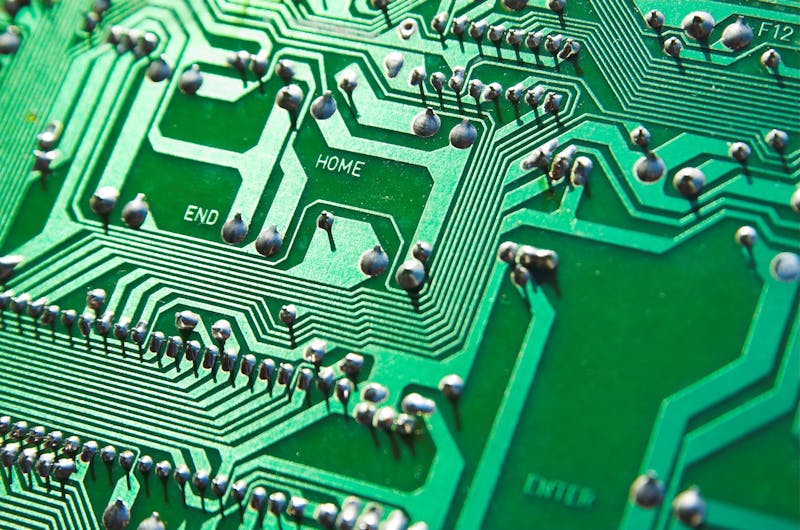
Semiconductors don’t leave the fab as individual chips. They’re fabricated in grids on circular silicon wafers — hundreds or thousands of dies at a time. Before any chip can be placed into a phone, server, or car, it must be physically cut from that wafer with extraordinary precision: tolerances measured in microns, with zero room for cracks or contamination.
That cutting — called dicing — along with the preceding grinding (thinning wafers to their final thickness) is where DISCO Corporation has built an unassailable position. Whether the chip is made by TSMC, Samsung, Intel, or any other foundry, the odds are overwhelming that a DISCO machine performed the cut.
Company Snapshot: From Grinding Wheels to Global Dominance
Founded in 1937 as Dai-Ichi Seitosho Co., Ltd. — originally a manufacturer of grinding wheels — DISCO Corporation (TSE: 6146) has spent nearly nine decades refining precision processing technology. Headquartered in Ota-ku, Tokyo, the company transformed itself from an industrial abrasives maker into the world’s undisputed leader in semiconductor back-end equipment.
DISCO’s core product lines include:
- Dicing saws and laser saws — precision cutting of semiconductor wafers into individual dies
- Grinders — thinning wafers to target thickness (critical for 3D packaging)
- Polishers — surface finishing for advanced applications
- Consumables — diamond blades, grinding wheels, and other replacement parts (a high-margin recurring revenue stream)
In February 2026, DISCO announced that cumulative shipments of its laser saw systems surpassed 4,000 units — a milestone reflecting the accelerating adoption of laser-based dicing for advanced semiconductor nodes where mechanical blades reach their physical limits.
Financial Performance: Record After Record
DISCO’s financial trajectory tells the story of a company riding — and enabling — the global semiconductor boom. FY2024 (ending March 2025) delivered record results for the fifth consecutive year.
| Fiscal Year (ending March) | Net Sales (¥B) | Operating Income (¥B) | Operating Margin | Net Income (¥B) |
|---|---|---|---|---|
| FY2020 (Mar 2021) | 161.1 | 37.3 | 23.1% | 27.6 |
| FY2021 (Mar 2022) | 253.8 | 91.5 | 36.1% | 67.0 |
| FY2022 (Mar 2023) | 284.1 | 110.4 | 38.9% | 80.9 |
| FY2023 (Mar 2024) | 307.6 | 121.5 | 39.5% | 84.3 |
| FY2024 (Mar 2025) | 393.3 | 166.8 | 42.4% | 123.9 |
Sources: DISCO Corporation FY2024 Consolidated Financial Results (April 2025); DISCO IR Library (disco.co.jp/eg/ir/); StockAnalysis.com (TYO:6146); MarketScreener FY2024 earnings report; CompaniesMarketCap.com
Several things stand out from this table. First, revenue more than doubled in four years — from ¥161B to ¥393B. Second, operating margins expanded from 23% to over 42%, a remarkable feat for a hardware manufacturer. Third, net income surged nearly 5x over the same period. The company is entirely debt-free, with cash reserves exceeding total liabilities.
The Consumables Flywheel
A critical — and often underappreciated — part of DISCO’s business model is its consumables segment. Every dicing saw and grinder requires replacement blades and grinding wheels, which must be purchased from DISCO on an ongoing basis. This creates a razor-and-blade dynamic: each equipment sale locks in years of high-margin consumable purchases. As the global installed base of DISCO machines grows, this recurring revenue stream compounds.
Geographic Diversification
DISCO derives the vast majority of its revenue from outside Japan. In Q2 FY2025 (July–September 2025), overseas sales constituted 89.9% of total revenue, with key markets including Taiwan (home of TSMC), China, South Korea, and Southeast Asia — essentially everywhere semiconductors are manufactured.
Why DISCO Is Nearly Impossible to Displace
DISCO’s dominance isn’t simply about being first to market. Several structural moats protect its position:
- Extreme precision requirements: Semiconductor dicing operates at tolerances of 1–2 microns. Switching to an unproven vendor risks destroying millions of dollars worth of processed wafers.
- Qualification cycles: Foundries must qualify every piece of equipment through months of testing. Once qualified, there is enormous inertia against switching.
- Proprietary diamond blade technology: DISCO manufactures its own synthetic diamond blades with proprietary formulations. Competitors cannot easily replicate the materials science.
- Integrated ecosystem: DISCO offers dicing, grinding, polishing, and consumables as an integrated solution. Competitors typically only address one segment.
- R&D intensity: The company invests approximately 33% of revenue into R&D — an extraordinary ratio that continuously widens the technology gap.
The primary competitors — Tokyo Seimitsu (ACCRETECH) in Japan and a handful of smaller Chinese entrants — hold a combined minority share and lack DISCO’s breadth of technology or global service infrastructure.
The Will System: A Corporate Culture Unlike Any Other
Beyond its technology, DISCO operates one of the most unusual management systems in corporate Japan — or anywhere else. Since 2011, the company has run on an internal currency called “Will,” introduced by CEO Kazuma Sekiya.
Under the Will system:
- No boss assigns work. All tasks — from engineering projects to office maintenance — are posted on an internal marketplace app with a Will price tag.
- Employees bid on tasks they want to perform, earning Will when they complete them.
- Internal services are priced in Will. Need a conference room? That costs Will. Want IT support? Pay in Will. Even using the company cafeteria involves Will transactions.
- Bonuses are partially linked to Will balances, creating direct financial incentives for productivity and initiative.
The system was studied by Harvard Business School (case study: “P-Will at DISCO”) and has been credited with transforming DISCO’s operating margins — from approximately 16% before implementation to over 40% today. By applying free-market principles internally, DISCO has created a culture of extreme accountability, self-direction, and cost consciousness that is almost impossible for competitors to copy.
Chiplets and Advanced Packaging: The Next Growth Engine
The semiconductor industry’s shift toward chiplet-based architectures and advanced packaging is perhaps the single most important tailwind for DISCO’s future.
Traditional chip design places everything on a single monolithic die. Chiplet architectures — already deployed by AMD, Intel, and increasingly by AI chip designers — split functionality across multiple smaller dies that are then connected within a single package. This trend has profound implications for DISCO:
- More cuts per wafer: Chiplets are smaller than monolithic dies, meaning more dicing cuts are required per wafer.
- Thinner wafers: 3D stacking and advanced packaging require wafers ground to 50 microns or less — dramatically thinner than traditional processes, increasing demand for DISCO’s grinding equipment.
- Tighter tolerances: Heterogeneous integration (combining dies from different process nodes in one package) demands even higher precision, favoring DISCO’s technology leadership.
- New materials: Advanced packaging introduces glass substrates, silicon interposers, and compound semiconductors — each requiring specialized dicing and grinding solutions where DISCO has invested heavily.
| Market / Metric | 2025 (Est.) | 2031 (Proj.) | CAGR |
|---|---|---|---|
| Global Dicing Equipment Market | $0.82B | $1.20B | 6.3% |
| Semiconductor Packaging Equipment Market | $5.2B | $9.6B | 10.7% |
| Advanced Packaging Market (overall) | $44.3B | $78.6B | 10.1% |
Sources: Mordor Intelligence — Dicing Equipment Market Report (2025); GlobeNewsWire — Semiconductor Assembly Packaging Equipment Market Trends 2025–2035; Towards Packaging — Semiconductor Packaging Market Trends & Size 2026–2035
With DISCO commanding approximately 70–80% of the dicing equipment market, even modest market growth translates into substantial revenue gains. And the chiplet revolution suggests growth will be anything but modest.
AI Demand: The Accelerant
Generative AI has become DISCO’s most powerful near-term catalyst. AI accelerators — GPUs from NVIDIA, custom chips from Google (TPU), Amazon (Trainium), and Microsoft (Maia) — are among the most complex semiconductors ever manufactured. They use the largest die sizes, the most advanced packaging, and require the most precise dicing and grinding.
DISCO’s management has explicitly called out AI-related demand as a primary growth driver, with equipment shipments for generative AI applications expected to remain strong through FY2025 and beyond. The company’s proprietary Taiko wafer-thinning technology and stealth dicing capabilities are particularly critical for the hybrid bonding processes used in next-generation AI chips.
Investment Considerations
For investors and business partners evaluating DISCO Corporation, the key metrics paint a compelling picture:
- Return on Invested Capital (ROIC): 54% in 2025 — exceptional by any standard
- Balance sheet: Zero debt, net cash position exceeding total liabilities
- Revenue growth: 27.9% YoY in FY2024; analysts project 6–10% annual growth going forward
- Operating margin: 42.4% and expanding — among the highest in semiconductor equipment
- Market position: 70–80% global share in an essential, non-substitutable process
- Valuation: Trades at a premium (TSE: 6146), reflecting its monopoly-like positioning
The primary risks include cyclicality in semiconductor capital expenditure, potential margin pressure from Chinese competitors in lower-end segments, and currency fluctuations given the high overseas revenue ratio. However, DISCO’s technological moat, consumables-driven recurring revenue, and exposure to secular growth in AI and advanced packaging provide strong structural support.
Conclusion: The Quiet Giant That Cuts the Future
In a semiconductor industry obsessed with nanometer-scale transistors and billion-dollar fabs, DISCO Corporation occupies a unique position: it makes the tools that physically turn wafers into usable chips. No dicing, no chips. No DISCO, no dicing — at least not for 70–80% of the world’s production.
With record financial performance, an unmatched competitive moat, a genuinely unique corporate culture, and powerful tailwinds from AI and advanced packaging, DISCO is not just a hidden gem — it’s a foundational pillar of the global technology ecosystem.
For international businesses seeking partnerships, supply chain insights, or investment opportunities in Japan’s deep-tech ecosystem, companies like DISCO represent exactly the kind of world-class capability that defines Japanese manufacturing excellence.
Explore Japan’s Hidden Champions
Japonity connects international businesses with Japan’s most innovative companies — from semiconductor equipment leaders to precision manufacturers and beyond. Whether you’re exploring supply chain partnerships, investment opportunities, or market entry strategies, we can help you navigate Japan’s business landscape.
→ Start your Japan business matching journey here
Interested in Japanese business opportunities?
Whether you're looking for technology partners, engineering talent, or market insights — we can help connect you with the right Japanese organizations.
Get in Touch →