Japanese strawberries are not the strawberries you know. Bred for decades to maximize sweetness, fragrance, and visual perfection, varieties like Amaou, Tochiotome, and Skyberry routinely sell for ¥1,000–5,000 per pack ($7–35) at Japanese supermarkets — and far more at luxury fruit shops. A single box of premium Amaou can fetch $50 or more in Hong Kong and Singapore. As Japan pushes to hit its ¥5 trillion food export target by 2030, strawberries have emerged as one of the fastest-growing export categories. Here is what international buyers, retailers, and investors need to know about the world’s most meticulously engineered berry.
The Scale of Japan’s Strawberry Obsession
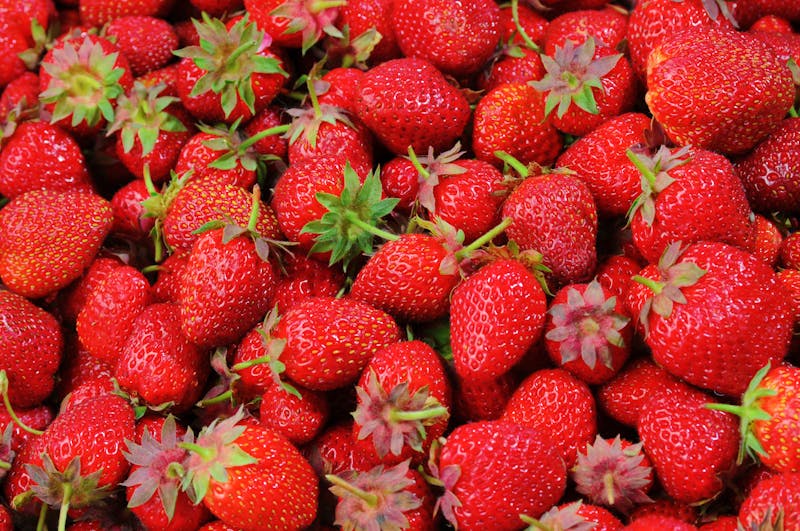
Japan produces approximately 160,000 tons of strawberries annually, making it one of the top 10 strawberry-producing countries globally. But unlike the US or Spain, where strawberries are a commodity crop optimized for yield and shelf life, Japan treats the strawberry as a premium craft product.
There are over 300 registered strawberry varieties in Japan — more than any other country. Each prefecture competes fiercely to develop proprietary cultivars that become regional brands, sources of local pride, and engines of agricultural tourism. This is not industrial farming. It is monozukuri — the Japanese philosophy of meticulous craftsmanship — applied to fruit.
The domestic market alone is worth over ¥180 billion ($1.2 billion) annually. Strawberries are Japan’s most consumed fruit by volume, eaten fresh, used in desserts (the iconic Japanese Christmas cake is topped with strawberries), and gifted in luxury packaging.
The Top Varieties: A Buyer’s Guide
Not all Japanese strawberries are equal. Each variety has distinct characteristics that determine its market positioning, pricing, and export potential.
| Variety | Prefecture | Key Characteristics | Brix (Sugar) | Price Range (domestic) |
|---|---|---|---|---|
| Amaou (あまおう) | Fukuoka | Large, deep red, intensely sweet. Name means “sweet, round, large, delicious” | 11–15° | ¥800–2,000/pack |
| Tochiotome (とちおとめ) | Tochigi | Balanced sweetness and acidity. Japan’s most widely grown variety | 9–12° | ¥500–1,000/pack |
| Skyberry (スカイベリー) | Tochigi | Premium large-fruit successor to Tochiotome. Conical shape, firm | 10–14° | ¥1,000–3,000/pack |
| Yayoihime (やよいひめ) | Gunma | Pale orange-red, excellent shelf life, mild sweetness | 10–13° | ¥600–1,200/pack |
| Hinoshizuku (ひのしずく) | Kumamoto | Juicy, aromatic, large. “Drop of fire” — named for Kumamoto’s volcano | 11–14° | ¥800–1,800/pack |
| Kotoka (古都華) | Nara | Deep red interior, complex flavor. Luxury positioning | 12–16° | ¥1,500–4,000/pack |
| White Jewel (白い宝石) | Saga/various | White strawberry. Ultra-premium gift item. Mild, pineapple notes | 10–13° | ¥3,000–10,000/pack |
Sources: JA Group variety profiles; Fukuoka Prefecture Agricultural Research Center; Tochigi Prefecture Strawberry Research Institute. Brix and pricing based on 2025-2026 domestic retail data.
Why Japanese Strawberries Taste Different
The quality gap between Japanese strawberries and those sold in most international supermarkets is not subtle. It’s dramatic. The reasons are structural:
Breeding Philosophy
Western strawberry breeding prioritizes yield, disease resistance, and shelf life — the fruit needs to survive mechanical harvesting, cold chain transport across continents, and days on supermarket shelves. Flavor is a secondary consideration.
Japanese breeding prioritizes taste, aroma, texture, and appearance — in that order. Varieties are developed over 10-15 year programs by prefectural agricultural research centers, with thousands of cross-pollination trials and years of sensory evaluation by trained tasting panels. Amaou took 6 years and over 100,000 seedling evaluations before release.
Cultivation Methods
Most Japanese strawberries are grown in elevated greenhouse systems (高設栽培 / kousetsu saibai) — raised beds at waist height inside temperature-controlled plastic greenhouses. This allows:
- Precise temperature management — daytime 23-25°C, nighttime 5-8°C. The temperature differential concentrates sugars
- Individual fruit attention — farmers thin blossoms to limit fruit per plant (typically 15-20 berries vs. 50+ in industrial cultivation), channeling energy into fewer, larger, sweeter fruits
- Hand harvesting only — every strawberry is picked by hand at peak ripeness, not before
- Pollination by bees — honeybee hives are placed inside greenhouses for natural pollination, producing more uniform fruit shape
The Gift Market Premium
Japan’s gift-giving culture (贈答 / zoutou) creates a market tier that doesn’t exist elsewhere. Premium strawberries are packaged in individual cushioned trays, sometimes with each berry wrapped separately, and sold at luxury fruit shops like Sembikiya (founded 1834) for ¥5,000–15,000 per box. The white strawberry “White Jewel” (白い宝石) can sell for ¥1,000+ per berry — positioning it not as food but as an edible luxury good.
The Export Boom
Japanese strawberry exports have surged in recent years, driven by demand from wealthy Asian consumers who encounter Japanese fruit during visits to Japan and seek it at home.
| Year | Export Volume (tons) | Export Value (¥ billion) | Top Markets |
|---|---|---|---|
| 2018 | 1,120 | 2.5 | Hong Kong, Taiwan, Singapore |
| 2020 | 1,480 | 3.6 | Hong Kong, Taiwan, Thailand |
| 2022 | 2,050 | 5.8 | Hong Kong, Taiwan, Singapore, Thailand |
| 2024 | 2,800 | 8.4 | Hong Kong, Taiwan, Singapore, Thailand, US |
| 2025 (est.) | 3,200+ | 10.0+ | Hong Kong, Taiwan, Singapore, Thailand, US, UAE |
Sources: Ministry of Agriculture, Forestry and Fisheries (MAFF), “Agricultural Export Statistics” (2025); Japan Customs Trade Statistics; JETRO, “Fresh Fruit Export Trends” (2025).
Why Hong Kong and Singapore Lead
These markets share key characteristics: high per-capita income, established Japanese food culture, proximity enabling air freight delivery within 4-6 hours, and — critically — no phytosanitary barriers for Japanese strawberries. Hong Kong alone accounts for roughly 40% of Japan’s strawberry exports by value.
The US and EU Challenge
Exporting fresh Japanese strawberries to the US and EU remains difficult due to:
- Phytosanitary requirements — methyl bromide fumigation requirements can damage the delicate fruit
- Cold chain duration — 12+ hours of air freight vs. 4 hours to Hong Kong; Japanese strawberries have a shelf life of only 3-5 days
- Price positioning — $30-50/box is a hard sell in markets where strawberries retail at $3-5/pound
However, premium retailers like Whole Foods, Harrods, and Isetan overseas branches are beginning to carry Japanese strawberries as ultra-premium seasonal items, targeting affluent Asian diaspora and luxury food enthusiasts.
The IP Battle: Protecting Japan’s Strawberry Genetics
One of the most contentious issues in Japanese agriculture is the unauthorized propagation of Japanese strawberry varieties overseas. South Korea and China have been growing cultivars derived from Japanese genetics — sometimes through legally questionable means — and exporting them to the same markets Japan targets.
The most high-profile case involved varieties genetically traced to Tochiotome and Akihime being cultivated in South Korea under different names. MAFF estimated that Japan lost ¥22 billion annually in potential strawberry export revenue due to unauthorized overseas cultivation of Japanese-origin varieties.
In response, Japan enacted the revised Plant Variety Protection and Seed Act (種苗法改正, 2022), which:
- Restricts unauthorized export of registered variety seeds and seedlings
- Allows breeders to designate specific countries/regions where propagation is permitted
- Increases penalties for IP violations
- Requires permission for taking registered varieties outside Japan
For international buyers, this means sourcing genuine Japanese strawberries requires working through authorized channels — which actually strengthens the premium positioning and authenticity story.
Strawberry Tourism: Ichigo-gari
Ichigo-gari (いちご狩り / strawberry picking) is a major agritourism category in Japan, generating an estimated ¥30-50 billion annually. From January to May, hundreds of farms across Tochigi, Fukuoka, Shizuoka, and Chiba prefectures open their greenhouses to visitors who pay ¥1,500-3,000 for 30-60 minutes of all-you-can-eat picking.
For inbound tourism operators and regional development agencies, ichigo-gari represents a proven model for combining agriculture with experience tourism — a format increasingly sought by international visitors to Japan.
Business Opportunities
For Importers and Retailers
- Air-freight fresh strawberries — target December-March peak season for Amaou and Skyberry to Asian luxury retail markets
- Frozen and processed products — Japanese strawberry purée, freeze-dried strawberries, and strawberry-flavored products have longer shelf life and can reach US/EU markets
- Private label partnerships — work with JA cooperatives or individual farms to create exclusive product lines
For Food Manufacturers
- Japanese strawberry as a premium ingredient — for confectionery, dairy, beverages, and cosmetics
- Freeze-dried Amaou powder — commanding ¥15,000-25,000/kg, used in premium chocolate, ice cream, and patisserie
- Strawberry-flavored products — Japanese strawberry flavoring is distinct from generic strawberry flavor; licensing “made with Japanese strawberries” positions products in the premium tier
For AgriTech Companies
- Smart greenhouse technology — Japanese strawberry farms are rapidly adopting IoT sensors, AI-driven climate control, and automated harvesting aids
- Post-harvest technology — extending the 3-5 day shelf life of Japanese strawberries is the single biggest bottleneck to export expansion; any solution that adds even 2-3 days unlocks billions in market potential
- Vertical farming for strawberries — companies like Spread are experimenting with indoor strawberry cultivation that could enable year-round production
For Investors
- Japanese agricultural export funds — government-backed funds (MAFF subsidies, JFC loans) support strawberry farm modernization and export infrastructure
- Cold chain logistics — investment in specialized air-cargo and last-mile cold chain for premium fruit is an underdeveloped segment with clear demand
- Brand licensing — as IP protection strengthens, the value of authentic Japanese strawberry brand licensing will increase
The Future: Can Japan Scale Without Losing Quality?
Japan’s strawberry industry faces a fundamental tension: the very characteristics that make its strawberries premium — hand cultivation, small-scale farming, meticulous individual attention — are the same factors that limit production volume and export scale.
The average Japanese strawberry farmer is over 65 years old. Without technological solutions or new farming models, production capacity may actually decline even as international demand grows.
The most promising paths forward include:
- Semi-automation — robotic harvesting assist (not full automation, which damages delicate fruit) combined with AI ripeness detection
- Licensed overseas production — authorized cultivation of Japanese varieties in countries like Australia, New Zealand, or Chile under strict quality control, using Japanese cultivation protocols
- Corporate farming — larger-scale operations that maintain quality standards while achieving greater efficiency, a model being piloted by companies like GRA Inc. (Migaki-Ichigo brand)
For the international market, the message is clear: Japanese strawberry supply will remain constrained for the foreseeable future. Early movers who establish sourcing relationships now will have a structural advantage as demand continues to outpace supply.
Interested in sourcing Japanese strawberries or connecting with Japanese agricultural producers? Contact Japonity — we connect global buyers with Japan’s finest food and beverage companies.
Interested in Japanese business opportunities?
Whether you're looking for technology partners, engineering talent, or market insights — we can help connect you with the right Japanese organizations.
Get in Touch →