Miso exports from Japan have quadrupled in two decades — from 4,243 tons in 1997 to over 16,000 tons by 2017, with growth accelerating further through 2025. What was once an obscure ingredient in the West is now a staple in health-conscious kitchens worldwide. Behind this boom are Japanese producers who have spent years adapting their products for global markets.
Why Miso Is Booming Globally
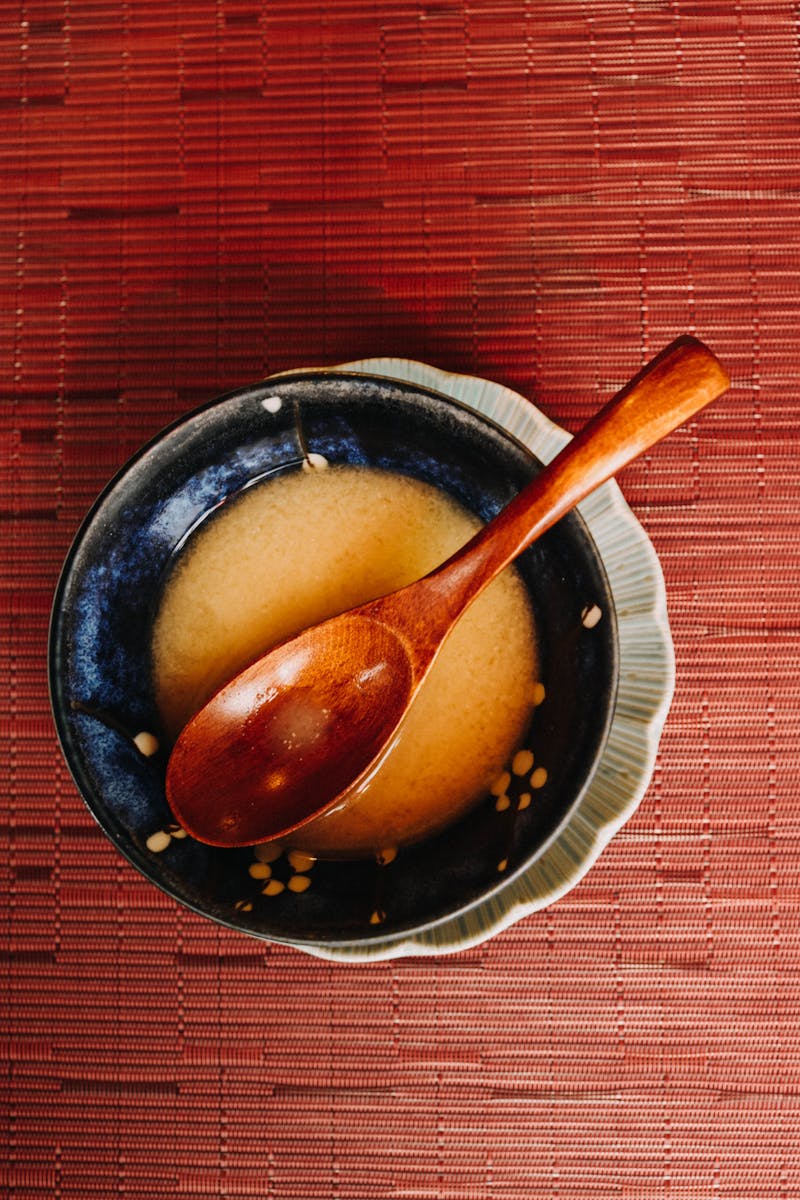
Miso checks every box for the modern health-conscious consumer: 12.8g protein per 100g, rich in probiotics, packed with essential amino acids, and naturally vegan. The rise of plant-based diets has turned miso from a niche Asian ingredient into a mainstream umami source. Chefs use it in everything from salad dressings to desserts.
The global miso market is projected to grow at a CAGR of 5-6% through 2030, driven by demand in North America, Europe, and Southeast Asia.
The Three Giants of Japanese Miso Export
Marukome (マルコメ) — The ¥50 Billion Market Leader
Japan’s largest miso producer. Revenue: ¥50.265 billion (FY ending March 2025). Founded in 1854 in Nagano Prefecture. Produces over 100,000 tons of miso annually, commanding approximately 20% of Japan’s domestic market among 2,500 producers.
The key move: Marukome opened a factory in Irvine, California in 2007 — making them one of the few Japanese miso companies manufacturing locally in the US. This eliminates import logistics and allows them to serve North American customers with fresher products and shorter lead times. They export approximately 6,200 tons annually to South Korea, China, Vietnam, Canada, Europe, Brazil, Argentina, New Zealand, and Australia.
Hikari Miso (ひかり味噌) — The Organic Champion
The world’s leading organic miso manufacturer, holding approximately 70% of Japan’s organic miso market. Founded in 1936. Exports to 55+ countries. What sets Hikari apart is their aggressive certification strategy: organic, non-GMO, vegan, kosher, AND halal certified — covering virtually every dietary requirement in global markets.
They exhibited at ANUGA 2025 (Europe’s largest food trade fair) and maintain sales offices in California. Their product line includes white, red, and aged black miso varieties, plus instant miso soup and Menraku ramen.
Hanamaruki (ハナマルキ) — The Koji Innovator
Japan’s #2 miso producer. Founded in 1918. While their miso business is strong, Hanamaruki‘s most innovative product is Liquid Shio Koji — the world’s only koji seasoning in liquid form. This product has found unexpected success in US specialty food markets, where chefs use it as a marinade, tenderizer, and umami booster. Available at Market Hall Foods, Christopher’s Milk Street Store, igourmet, and ChefShop.
The Organic Opportunity
Organic miso is the fastest-growing segment. Western consumers increasingly demand organic, non-GMO, and clean-label products — and Japanese organic miso meets all these criteria naturally. The premium pricing (2-3x conventional miso) makes it attractive for both producers and retailers.
Key challenge: Japan’s organic certification (JAS) must be supplemented with USDA Organic, EU Organic, or other local certifications for export markets. Companies like Hikari Miso have invested heavily in multi-certification, creating a competitive moat.
| Company | Revenue | Export Countries | Key Strength | US Presence |
|---|---|---|---|---|
| Marukome | ¥50.2B | 12+ | Scale, US factory | Factory (Irvine, CA) |
| Hikari Miso | — | 55+ | Organic (#1), multi-cert | Sales office (CA) |
| Hanamaruki | — | US + intl | Liquid Shio Koji (world only) | Specialty retail |
Sources: Marukome Co., Ltd., “Corporate Information” (FY2025); Hikari Miso Co., Ltd., “Company Profile“; Hanamaruki Foods Inc., corporate website. Export volume data: MAFF Export Statistics; Japan Customs.
For International Buyers
If you are a food distributor, restaurant chain, or retailer looking to add miso to your product lineup, the current weak yen makes Japanese miso exceptionally price-competitive. The three major producers above all have English-language sales teams and experience with international logistics, certifications, and labeling requirements.
Interested in Japanese business opportunities?
Whether you're looking for technology partners, engineering talent, or market insights — we can help connect you with the right Japanese organizations.
Get in Touch →