Japan has long been synonymous with robotics. From the factory floors of Toyota to the research labs of Sony and Honda, Japanese engineers have spent decades perfecting machines that work alongside — and sometimes instead of — humans. Today, Japan holds more industrial robots per manufacturing worker than almost any other country on earth.
But what makes Japan so dominant in this field? And more importantly, what does it mean for global businesses looking to partner with or learn from Japanese robotics companies?
The Numbers Tell the Story
Japan accounts for roughly 45% of global industrial robot production. The International Federation of Robotics consistently ranks Japan among the top three most automated nations in the world, alongside South Korea and Germany. In the automotive sector alone, Japan deploys over 1,400 robots per 10,000 employees — more than triple the global average.
This is not an accident. It is the result of decades of government policy, corporate investment, and a cultural willingness to embrace automation in ways that other societies have resisted.
Key Players in Japan's Robotics Industry
FANUC
Founded in 1956 and headquartered at the foot of Mount Fuji, FANUC is the world's largest maker of industrial robots and CNC systems. Its yellow robots are a fixture in factories from Michigan to Shenzhen. FANUC's strength lies in precision — its machines operate with tolerances measured in microns, making them indispensable in semiconductor and electronics manufacturing.
Yaskawa Electric
Yaskawa's Motoman robots are deployed in over 100 countries. The company has been a pioneer in collaborative robots (cobots) — machines designed to work safely alongside human workers without cages or barriers. Its MOTOMAN-HC series is now widely used in small and medium-sized manufacturers across Southeast Asia and Europe.
Honda Robotics (ASIMO and Beyond)
Honda's ASIMO was the world's most advanced humanoid robot for nearly two decades. While ASIMO has been retired, the research behind it continues in Honda's robotics division, which now focuses on mobility assistance devices and autonomous systems. Honda's approach — patient, long-term R&D over short-term commercialization — is emblematic of how Japanese companies think about deep technology.
SoftBank Robotics (Pepper)
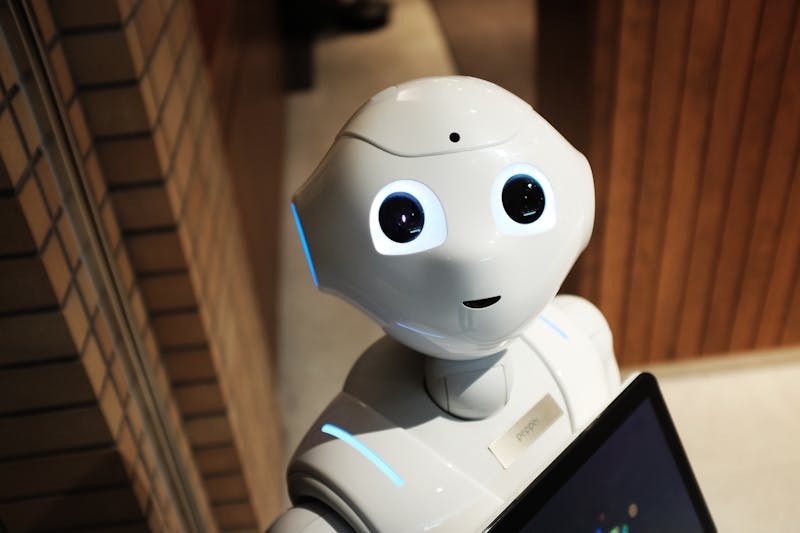
Pepper, the humanoid service robot from SoftBank Robotics, became a global symbol of social robotics when it launched in 2014. Deployed in retail stores, banks, and airports across Asia and Europe, Pepper demonstrated that robots could function in unstructured, human environments. Though commercial results were mixed, the technology pushed the entire industry forward.
Why Japan Leads: Three Structural Reasons
1. Demographics Drive Demand
Japan has the world's oldest population. With a shrinking labor force and one of the lowest immigration rates among developed nations, automation is not optional — it is existential. Japanese manufacturers automated not because they wanted to cut costs, but because they had no choice. This urgency produced decades of focused investment that other countries are only now beginning to replicate.
2. Manufacturing Culture and Precision Obsession
The concept of monozukuri — the art of making things — runs deep in Japanese manufacturing culture. This obsession with craftsmanship and precision translates directly into robotics. Japanese robots are known for their reliability and longevity. A FANUC machine purchased in the 1990s often still runs today. That kind of quality is built into the DNA of Japanese engineering.
3. Government Support and Long-Term Investment
Japan's Ministry of Economy, Trade and Industry (METI) has consistently backed robotics through funding, regulatory frameworks, and national strategies. The "Robot Strategy" launched in 2015 set explicit targets for robot adoption across agriculture, nursing care, construction, and infrastructure maintenance. This institutional support has created a stable environment for long-term R&D investment.
The Next Frontier: Service and Care Robots
Industrial robots are just the beginning. Japan is now investing heavily in service robotics — machines designed to assist elderly people, perform surgery, deliver goods, and maintain infrastructure. The nursing care sector alone is projected to require hundreds of thousands of robots by 2030 as Japan's population continues to age.
Companies like CYBERDYNE (makers of the HAL exoskeleton for rehabilitation), Fujifilm (endoscopy robots), and dozens of university spinouts are building the next generation of medical and care robotics. These are not science fiction — they are already deployed in hospitals and care facilities across Japan.
What This Means for Global Businesses
For manufacturers, technology buyers, and investors outside Japan, the opportunity is significant. Japanese robotics companies are increasingly looking for overseas partners — distributors, systems integrators, and end-users — to expand globally. Many of the mid-sized robotics companies that are leaders in their niches inside Japan remain virtually unknown outside the country.
That gap is exactly what Japonity exists to close.
If you are exploring partnerships with Japanese robotics companies — whether as a manufacturer looking to automate, a distributor seeking new product lines, or an investor looking for undervalued technology — contact us. We connect the right people.
Interested in Japanese business opportunities?
Whether you're looking for technology partners, engineering talent, or market insights — we can help connect you with the right Japanese organizations.
Get in Touch →